

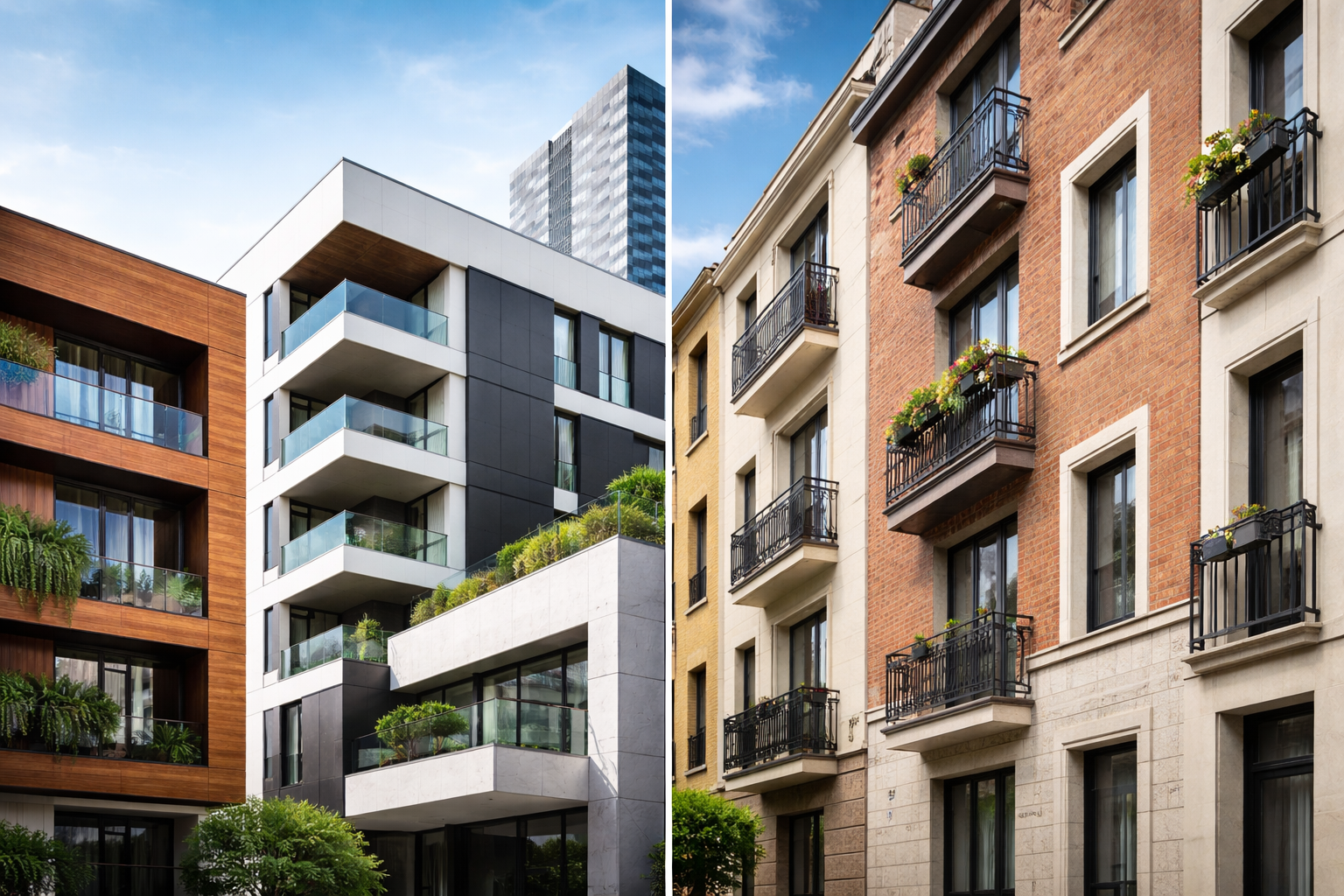
Choosing the right facade material has a direct impact on how a building looks, performs, and ages over time. Beyond aesthetics, exterior surfaces must withstand changing weather conditions, temperature fluctuations, pollution, and daily wear while continuing to protect the structure beneath. This makes facade material selection a performance-driven decision rather than one based only on appearance.
In addition, as architectural needs evolve, many conventional facade materials are being reassessed for their durability, maintenance requirements, and design flexibility. In this context, high-pressure laminate (HPL) exterior cladding has emerged as a contemporary alternative that addresses several limitations of traditional options. This blog compares HPL exterior cladding with commonly used facade materials to help architects, developers, and building owners determine which choice offers better performance, value, and practicality over time.
Understanding HPL Exterior Cladding
HPL exterior cladding refers to facade panels manufactured using high-pressure laminate technology, developed specifically for use in outdoor environments. These panels are created by compressing multiple layers of kraft paper impregnated with thermosetting resins under controlled heat and high pressure, forming a dense, stable, and non-porous surface.
The strength of HPL exterior cladding lies in its engineered construction rather than material mass. This manufacturing process results in panels that are dimensionally stable and consistent in quality, making them suitable for contemporary facade systems that demand precision and uniformity. HPL panels are designed to integrate with structured installation frameworks, allowing for controlled expansion, clean detailing, and reliable long-term performance across varied building typologies.
In addition to structural reliability, HPL exterior cladding offers extensive design flexibility. A wide selection of colours, textures, and surface finishes enables architects and designers to achieve modern facade aesthetics while maintaining technical consistency throughout the building envelope.
Read Also: HPL or ACP Sheets: Which is Better for Exterior Wall Cladding?
What are Traditional Facade Materials?
Traditional facade materials include options such as brickwork, natural stone, cement plaster, concrete finishes, and metal-based systems that have been widely used in building exteriors for decades. These materials have historically been selected for their availability, familiarity, and perceived robustness.
Most traditional facade systems rely on material thickness, weight, or layered construction to provide protection and visual appeal. While effective in earlier construction practices, these materials often require intensive on-site labour, extended installation timelines, and periodic surface treatments to maintain appearance over time.
As building design evolves towards lighter, more efficient envelope systems, traditional facade materials can present limitations in terms of adaptability and finish consistency. Variations in workmanship, surface ageing, and maintenance requirements can impact the long-term visual uniformity of building exteriors, particularly in large-scale or contemporary architectural projects.
HPL Exterior Cladding vs Traditional Facade Materials: Key Differences
While both HPL exterior cladding and traditional facade materials are used to define and protect building exteriors, they differ significantly in how they perform, age, and support modern architectural requirements. Evaluating these differences side by side helps in understanding which solution aligns better with long-term design, maintenance, and performance expectations.
The table below compares HPL exterior cladding and traditional facade materials across key parameters that influence facade selection in contemporary building projects.
| Parameter | HPL Exterior Cladding | Traditional Facade Materials |
| Material Composition | Engineered panels manufactured using high-pressure laminate technology for controlled performance and consistency. | Natural or site-mixed materials such as stone, brick, cement plaster, or concrete-based finishes. |
| Structural Approach | Lightweight facade system designed to work with structured fixing and support frameworks. | Heavier systems that rely on material mass, thickness, or layered construction. |
| Installation Process | Factory-finished panels with dry installation methods, allowing faster and more predictable execution. | Labour-intensive, wet construction processes that depend heavily on on-site workmanship. |
| Finish Consistency | Uniform colour, texture, and surface finish across the facade, even on large elevations. | Variations in appearance are common due to material ageing, weathering, and workmanship differences. |
| Weather & Environmental Exposure | Designed for exterior exposure with stable performance under sunlight, rain, and changing temperatures. | Performance varies by material and often requires additional surface treatments or coatings over time. |
| Maintenance Requirements | Low maintenance, with simple cleaning sufficient to retain appearance. | Regular maintenance such as repainting, sealing, or repairs is often required to preserve the facade. |
| Design Flexibility | Wide range of contemporary finishes, colours, and textures suited to modern architectural expression. | Limited flexibility once installed; design changes are difficult and costly. |
| Lifecycle Value | Offers long-term value through durability, predictable performance, and reduced upkeep. | May involve lower initial material costs but higher long-term maintenance and repair effort. |
Performance in Indian Climate Conditions: HPL vs Traditional Facade Materials
Indian buildings are exposed to varied and demanding environmental conditions throughout the year. From high temperatures and intense sunlight to seasonal rainfall and urban pollution, facade materials must be able to perform consistently while maintaining their appearance.
To understand how facade materials respond in real conditions, it helps to look at their performance across key climatic factors.
Heat and Sun Exposure
Prolonged exposure to heat and ultraviolet radiation can affect facade surfaces over time. HPL exterior cladding is designed to maintain surface stability and finish consistency even under extended sun exposure, helping facades retain their visual quality across different regions and building orientations.
Traditional facade materials, such as painted plaster or natural stone, may experience fading, surface cracking, or discolouration with prolonged UV exposure, often requiring periodic refinishing.
Rainfall and Humidity
In areas with heavy rainfall or high humidity, exterior surfaces must resist moisture penetration and surface degradation. HPL exterior cladding features a dense, non-porous structure that supports reliable performance in wet conditions, reducing the risk of surface-related issues over time.
Many conventional materials are more porous by nature, which can lead to moisture absorption, staining, or surface deterioration if not regularly maintained.
Temperature Variations
Daily and seasonal temperature changes can cause expansion and contraction in facade materials. HPL exterior cladding systems are installed with provisions that allow controlled movement, helping maintain facade uniformity despite thermal fluctuations.
In contrast, rigid traditional materials may be more prone to visible cracks or joint stress when exposed to repeated temperature changes.
Urban Pollution and Dust
Urban facades are constantly exposed to dust, pollutants, and airborne particles that affect appearance. Smooth, factory-finished HPL surfaces are easier to clean and maintain, supporting long-term visual consistency.
Rough or textured traditional surfaces, on the other hand, tend to trap dirt more easily, often requiring frequent cleaning or surface treatments to maintain appearance.
Read Also: Comparing HPL and Stone Cladding: Understanding 4 Differences
Design Flexibility and Aesthetic Consistency
The table below highlights how HPL exterior cladding and traditional facade materials differ in terms of design possibilities and visual consistency across building exteriors.
| Design Aspect | HPL Exterior Cladding | Traditional Facade Materials |
| Range of Finishes | Available in a wide variety of colours, textures, and surface finishes suitable for contemporary facade design. | Finish options are limited to the natural or site-applied characteristics of the material. |
| Colour and Texture Consistency | Factory-finished panels ensure uniform colour and texture across all elevations. | Variations can occur due to material sourcing, workmanship, and weathering over time. |
| Application on Large Facades | Maintains visual uniformity even across expansive or multi-storey elevations. | Achieving consistency across large surfaces can be challenging. |
| Precision and Detailing | Supports clean lines, defined joints, and accurate alignment through structured installation systems. | Detailing depends largely on on-site execution and craftsmanship. |
| Design Adaptability | Allows for flexible layouts, patterns, and contemporary facade compositions. | Design changes after installation are often complex and limited. |
| Long-Term Appearance | Retains intended appearance with minimal visual change over time. | Ageing patterns may vary, affecting long-term aesthetic uniformity. |
Installation, Maintenance, and Lifecycle Value
When evaluating facade materials, considerations extend beyond appearance and performance to include how easily a system can be installed, maintained, and sustained over its lifecycle. Given below are the factors that directly influence project timelines, long-term upkeep, and overall cost efficiency.
Installation Efficiency
HPL exterior cladding systems are based on dry installation methods and prefabricated panels, allowing for controlled and predictable execution on site. This helps reduce construction time and dependency on extensive on-site finishing.
Traditional facade materials often involve wet construction processes and multiple application stages, which can increase installation time and reliance on skilled labour.
Maintenance Requirements
HPL exterior cladding is designed for low maintenance, with routine cleaning typically sufficient to retain surface appearance. Its stable, factory-finished surface reduces the need for frequent repairs or refinishing.
Traditional facade materials may require periodic treatments such as repainting, sealing, or surface repairs to maintain appearance and protect against environmental exposure.
Long-Term Cost and Value
While HPL exterior cladding may involve a higher initial material cost, it offers predictable long-term value through reduced maintenance needs and consistent performance. Over time, this can translate into lower lifecycle costs.
Traditional materials may appear cost-effective initially but can incur higher cumulative expenses due to ongoing maintenance, repairs, and potential surface deterioration.
Read Also: 4 Tips To Maintain Your Exterior Wall Cladding Panels
Which Facade Material Makes Sense for Your Project?
The choice between HPL exterior cladding and traditional facade materials depends on the type of project, usage expectations, and long-term performance goals. While both options can define a building’s exterior, their suitability varies across different construction scenarios.
Residential Buildings
For residential projects, facade materials must balance aesthetics with durability and ease of upkeep. HPL exterior cladding works well for modern homes and apartment buildings where consistent appearance, low maintenance, and weather resistance are important. Traditional materials may still be used in select design contexts but often require more ongoing care to maintain their finish.
Commercial and Institutional Projects
In commercial, hospitality, and institutional buildings, facades are exposed to higher usage, larger elevations, and stricter performance expectations. HPL exterior cladding offers predictable outcomes in terms of finish consistency and long-term reliability, making it suitable for projects where maintenance access and downtime need to be minimised.
New Construction vs Renovation
For new construction, both systems can be integrated at the design stage. In renovation projects, however, HPL exterior cladding provides greater flexibility due to its lighter weight and dry installation methods, allowing for facade upgrades without extensive structural modifications.
By aligning material choice with project type and long-term requirements, decision-makers can select a facade solution that supports both design intent and operational efficiency.
Read Also: What Is The Difference Between Exterior Cladding and A Facade?
Final Perspective: Making the Smarter Facade Choice
Selecting the right facade material is a long-term decision that influences not only how a building looks, but also how it performs and ages over time. While traditional facade materials have played a significant role in construction for decades, evolving design expectations and performance requirements have led to the adoption of more engineered exterior solutions.
HPL exterior cladding offers a balanced approach by combining durability, design flexibility, and predictable performance. Its structured installation systems, consistent finishes, and low maintenance requirements make it well suited for contemporary buildings that must withstand environmental exposure while maintaining visual clarity. Traditional materials, though familiar, often demand higher upkeep and can present challenges in achieving uniformity across large or complex facades.
For projects where long-term performance, ease of maintenance, and design consistency are key considerations, HPL exterior cladding emerges as a smarter, future-ready choice for modern building exteriors.
About Greenlam Clads
Greenlam Clads offers high-performance interior and exterior wall cladding solutions engineered for durability, consistency, and contemporary design. Backed by the manufacturing expertise of Greenlam Industries, the brand delivers advanced cladding systems designed to perform reliably in diverse climatic and usage conditions. With a focus on quality, safety, and long-term value, Greenlam Clads supports modern architectural requirements across residential, commercial, and institutional projects.
Frequently Asked Questions
Is HPL exterior cladding suitable for high-rise buildings?
Yes, HPL exterior cladding is suitable for high-rise and large-scale buildings. Its lightweight structure, engineered performance, and controlled installation systems make it effective for tall elevations and complex facade designs.
How does HPL exterior cladding compare to ACP panels?
Both are contemporary facade solutions, but HPL exterior cladding is often preferred for its solid construction, surface stability, and long-term performance. The choice depends on project-specific requirements such as durability expectations, design intent, and lifecycle value.
How is HPL for exterior applications different from interior HPL wall panels?
HPL for exterior applications is engineered to withstand outdoor conditions such as sunlight, rain, temperature variations, and pollution. Interior HPL wall panels are designed for indoor use and do not offer the same level of exterior performance.
What are the advantages of using high pressure laminate cladding for facades?
High pressure laminate cladding offers consistent finishes, reliable exterior performance, and low maintenance requirements. It also provides design flexibility through a wide range of colours and textures suitable for contemporary facades.
Can HPL exterior wall cladding be used for renovation projects?
Yes, HPL exterior wall cladding is well suited for renovation and retrofit projects. Its dry installation system allows facade upgrades without extensive structural changes to the existing building.
Is HPL cladding a low-maintenance facade solution?
HPL cladding is considered low maintenance. Routine cleaning is generally sufficient to retain its appearance, helping reduce the need for frequent repairs or surface treatments over time.